
Planning ahead for Christmas and early 2027

Update #20 - 1st October 2026
As we head towards Christmas, we are asking customers to help us plan ahead by sharing their made-to-order (MTO) requirements for December, January and February as early as possible. Early visibility will help us plan raw materials and production, and give you clearer guidance on delivery timing.
Our focus is on securing the right materials for your orders and having them available when production needs them. Planning ahead also helps us manage supply uncertainty associated with the Middle East situation, rather than relying on last-minute purchasing.
Made To Order (Non Stock) order planning dates
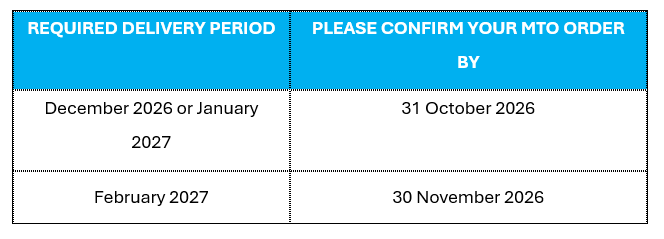
For non stock items (products that are specifically made to order) we are planning December 2026 and January 2027 as one combined production period to help balance demand across the holiday season.
To support this planning, we are asking customers to confirm MTO orders by the following dates.
Please note
These dates are planning deadlines, not a blanket cut-off for accepting orders. Delivery dates will be confirmed after we have checked the raw materials and production capacity required for your order.
What happens if you order later?
We understand that customer requirements can change and that not every order can be confirmed this far ahead. We will continue to consider orders received after these dates and accommodate them where materials and production capacity allow.
Where your requested timing is not achievable, we will discuss the next available delivery date with you. This may mean February delivery for late December or January orders, or March delivery for late February orders.
Early visibility makes the difference
The more customers who plan with us early, the better we can balance demand and reduce last-minute pressure on materials and production.
Please contact your EPL Account Manager or our customer service team to discuss your Christmas and early-2027 requirements. Thank you for working with us to plan ahead and keep your business moving.
Planning ahead Christmas Holidays
We're taking a break to enjoy the festive season with friends and family! EPL will be closed from Wednesday 23rd of December, and will reopen on Wednesday, 13th of January.
Petrochemical Supply Update
Disruption caused by the Middle East conflict will continue to affect petrochemical supply chains into 2027, even if the conflict ended today. Restoring infrastructure, rebuilding reserves and stabilising supply will take time.
Currently we are seeing
- Higher fuel and shipping costs: Elevated diesel prices and oil-tanker freight rates are putting pressure on transport costs, with further volatility possible as the Northern Hemisphere enters winter.
- Reduced reserve capacity: Commercial stocks and strategic reserves have been drawn down, leaving markets less able to absorb further supply disruptions.
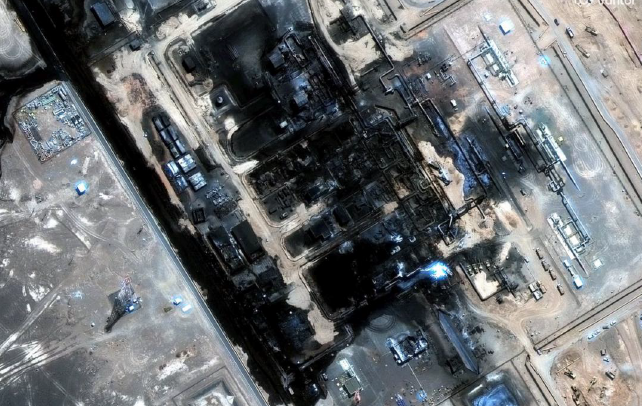
- Restricted oil supply: Disruption around the Strait of Hormuz and damage to Saudi export infrastructure continue to constrain oil flows.
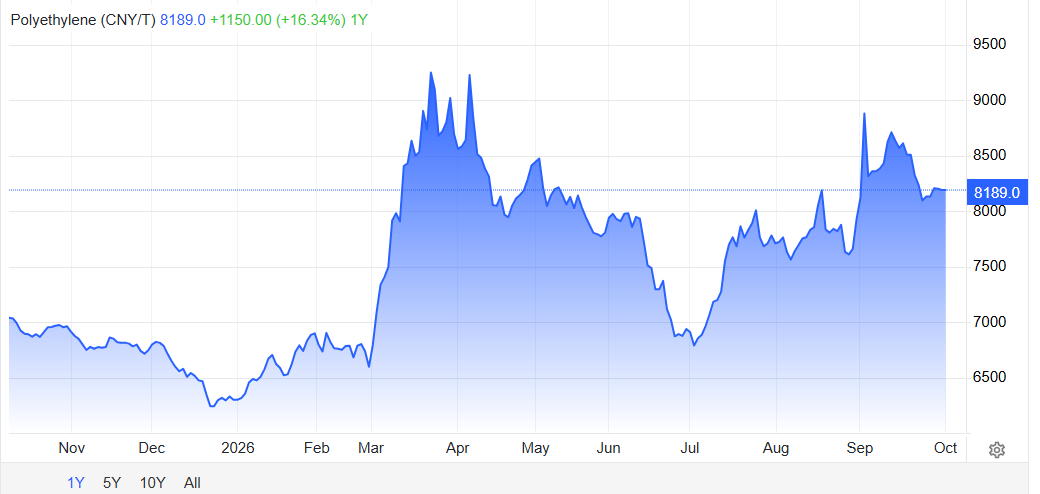
Alongside ongoing price volatility, we are at times experiencing difficulty securing raw materials within the lead times our customers require. Unfortunately, we are also having to pass on increased costs as they flow through our supply chain.
With sufficient advance notice of your requirements, we can sometimes reduce our reliance on spot-market purchases, where prices can be higher and more volatile. Forward orders give us greater flexibility to source raw materials and may help lessen the impact of increased costs.
This is why we have repeatedly encouraged customers to place forward orders wherever possible. Earlier visibility of your requirements gives us more time to secure materials and plan production, helping us minimise delays and provide greater certainty around delivery timing.
Customers planning upcoming projects or larger orders are encouraged to discuss their requirements with our team early. Please contact us to confirm current pricing, availability and delivery timing for your specific needs.
Changes to pricing
There is a significant difference between the spot prices we pay when materials are needed at short notice and the rates available under our supply contracts. Forward orders give us more opportunity to secure materials at contracted rates, reducing our reliance on higher-priced spot purchases and helping limit the cost impact on customers.
The surcharge has been useful while costs have been changing rapidly. However, where key raw-material costs remain elevated with no clear indication of easing, we will move away from a temporary Conflict Surcharge and apply product price increases where necessary. This better reflects the underlying cost of supplying those products and provides clearer, more consistent pricing.
Any pricing changes will be communicated directly to affected customers, with timing and product details confirmed through your EPL Account Manager and Sales Order Acknowledgements. We will continue to review costs closely and reassess pricing as market conditions change.
FAQ around pricing
-
Why has EPL introduced a Conflict Surcharge?
The Conflict Surcharge is a separate line item that allows us to clearly show extraordinary, conflict‑related increases in freight, insurance and raw‑material costs, rather than permanently loading these into base product prices. It is intended to be temporary and will be reduced or removed as conditions stabilise and costs normalise.
-
How is the Surcharge shown on Order Acknowledgements and Invoices.
The Conflict Surcharge is a separate line item that allows us to clearly show extraordinary, conflict‑related increases in freight, insurance and raw‑material costs, rather than permanently loading these into base product prices. It is intended to be temporary and will be reduced or removed as conditions stabilise and costs normalise.
-
How much is the current Conflict Surcharge?
The Conflict Surcharge on eligible orders has been reviewed regularly in response to changes in raw-material, energy, freight and supply-chain costs:
- From 1 April 2026 to 30 April 2026, the Conflict Surcharge was 9.5%.
- From 1 May 2026 to 30 June 2026, it increased to 12.5% in response to continued escalation in supplier raw-material costs.
- From 1 July 2026 to 30 September 2026, the surcharge reduced to 10.5%, reflecting an improvement in freight conditions at that time.
- From 1 October 2026, the Conflict Surcharge on eligible orders will increase to 12.5%.
-
Can I have a price increase instead of the Conflict Surcharge?
Yes. If you would prefer not to have the Conflict Surcharge shown as a separate line on eligible orders, EPL can incorporate the equivalent cost into your standard product pricing instead.
This removes the separate surcharge from invoices and order confirmations, while ensuring the current conflict-related cost pressures are reflected in the base price of the affected products. It may provide a simpler, more consistent pricing structure for customers with regular or ongoing requirements.
Please speak with your EPL Account Manager to discuss whether a revised price arrangement is suitable for your products and supply requirements.
-
How will I know what surcharge rate applies to my order?
The applicable Conflict Surcharge rate is shown on your Sales Order Acknowledgement, as well as on the final invoice where the surcharge applies.

Not Sure How This Affects You? Let's Talk.
With the widest range of raw materials available anywhere in New Zealand, EPL is better positioned than most to help customers navigate this volatility. If you're unsure how these supply and pricing shifts might affect your specific products or orders, reach out to the EPL sales team today, we'll walk you through your options and help you plan ahead with confidence.
Contact UsFrequently Asked Questions around our Supply Chain
-
Why is ordering early now essential?
Placing forward orders gives us time to secure raw materials, book production slots and, where necessary, source alternative materials so we can minimise delays and reduce the risk of stock‑outs.
-
What are the benefits of placing forward orders?
Forward orders improve your supply security by locking in demand earlier in our planning cycle, which helps us allocate limited materials fairly and avoid last‑minute shortages. They also give you better visibility of potential delays and allow us to work with you sooner on options if a particular material or product line is under pressure.
-
How does our Sales & Operations Planning (S&OP) process work?
EPL’s Sales and Operations Planning (S&OP) process is the core mechanism used to balance customer demand, production capacity and raw‑material purchasing, so that supply is protected without over‑buying at the peak of the market.
At EPL, S&OP is a structured, cross‑functional process that brings together Sales, Operations, Supply Chain, Finance and Customer Service to review demand and supply on a regular cadence.
Each week, the team:
- Reviews updated customer forward orders and quote pipeline to build a consolidated view of demand by product, customer and time period.
- Compares this view with current finished‑goods inventory, work‑in‑progress and raw‑material stocks to identify any potential gaps or surpluses.
- Agrees production plans and sequencing that best utilise available capacity while protecting critical customer requirements and export commitments.
This weekly rhythm allows EPL to respond to changes in customer demand, supply‑chain disruptions and market conditions, rather than relying on static annual or quarterly plans.

Taking a long‑term view on raw‑material purchasing
A key principle of EPL’s S&OP process is to avoid buying raw materials at the very peak of the price cycle wherever possible. Rather than reacting to short‑term spikes, the team:
- Looks at price and supply trends over a multi‑month horizon.
- Uses customer forward orders to phase purchases over time, smoothing exposure to extreme highs.
- Balances the need to secure supply with the risk of locking in excessive high‑cost inventory.
By taking this longer‑term view, EPL aims to protect customers from the worst of the volatility while still ensuring that critical materials are on hand when needed.
If you would like to discuss your forward orders, alternative options, or any concerns about upcoming projects, please contact Brian, Sam, Melissa, Janine or Gareth. We are committed to working with you through this period and to minimising disruption to your business as much as we can.
-
How does EPL plan stocking of Raw Material?
EPL has always operated a forward‑stocking model: A forward‑stocking model is a supply‑chain strategy where a manufacturer builds and holds inventory well in advance of actual customer demand, based on forecasts and current purchase orders.
That’s why EPL is asking for forward orders: the forward‑stocking model depends on early, transparent demand signals from customers.
Without a reliable forecast, we can’t determine how much raw material to order.
The escalating conflict in the Middle East has disrupted the global flow of resin and other polymer feed‑stocks.
- Ocean transit has been rerouted around the Cape of Good Hope, adding 8 – 15 days to voyages that previously came through the Suez Canal.
- Port congestion in key trans‑shipment hubs (Singapore, Colombo, Durban) is now 2‑3 weeks longer than normal.
- Raw Material Suppliers have already halted new booking windows for Q3‑Q4 2026 resin orders and imposed strict allocation limits on existing customers,
-
Where does EPL's raw material come from?
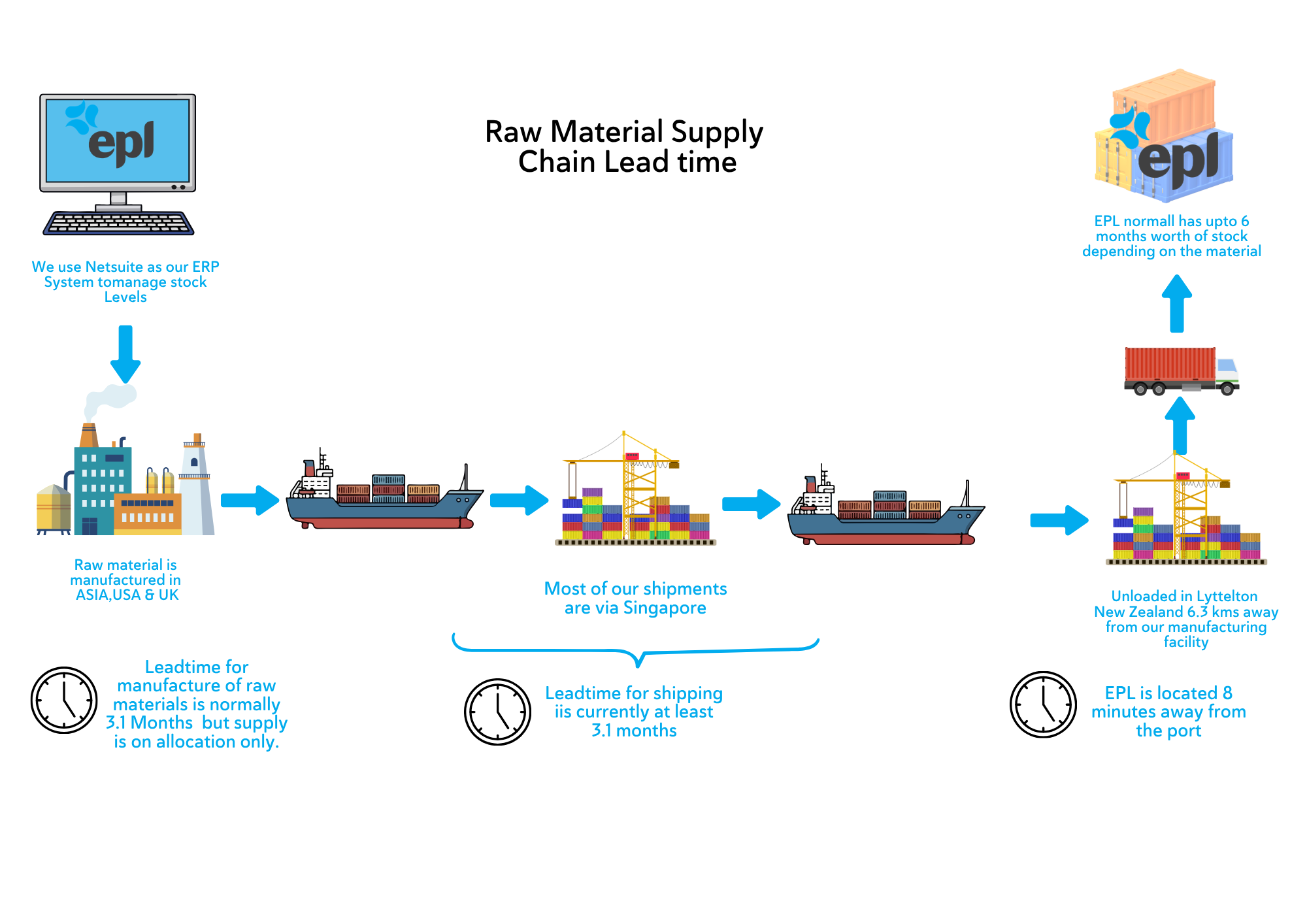
Our raw materials are sourced from a diversified group of suppliers across Asia, the UK, North America and Australia. This global spread helps us manage risk and support continuity of supply over the long term.
-
How much is the Current surcharge?
From 1st April 2026 to 30th April 2026 , the Conflict Surcharge was 9.5% on eligible orders.
From 1st May 2026 to 30th June 2026 it increased to 12.5% in response to continued escalation in raw‑material costs from our suppliers.
From 1st July 2026, the Conflict Surcharge has reduced to 10.5%, reflecting an improvement in freight conditions, and it will continue to be reviewed regularly and may move up or down as underlying costs change.
-
Will the surcharge be shown separately on my invoices?
Yes. Wherever possible, the Conflict Surcharge is shown as a distinct line item on quotes, order acknowledgements and invoices so you can clearly see the impact of conflict‑related costs. This helps keep base product pricing more stable and makes it easier to track when the surcharge reduces or is removed in future.
Contact us
If you have any questions or would like to discuss how this update affects your orders, please contact our sales team. You can reach Brian, Sam, Janine, Melissa or Gareth, who will be happy to work through the details with you and help minimise any disruption to your business.
Contact the Customer Service Team